

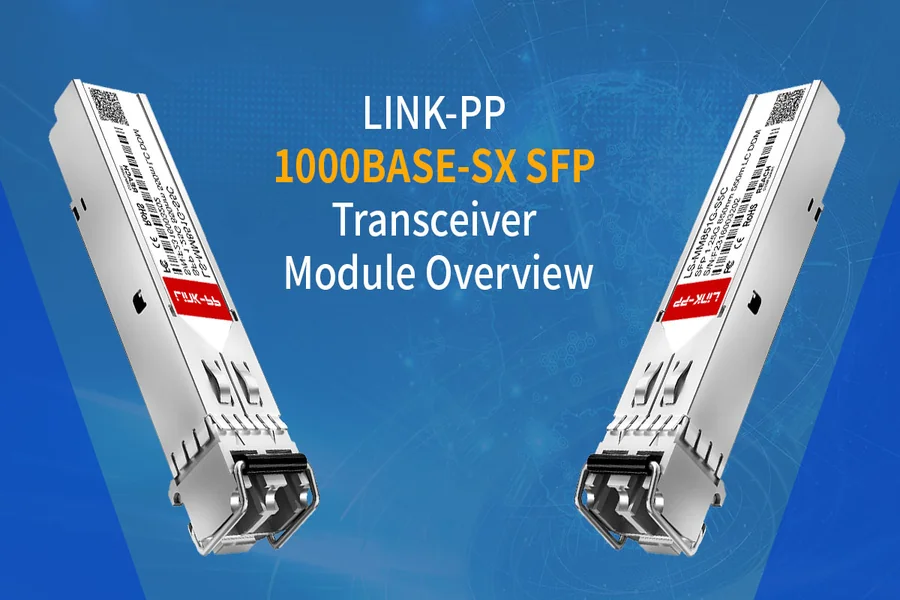
In modern enterprise networks, the access layer plays a crucial role in connecting end devices such as computers, IP phones, wireless access points, and security cameras to the broader network infrastructure. Although network technologies continue to evolve rapidly, Gigabit Ethernet remains the most widely used standard at the access layer. Among the different options available for implementing Gigabit connectivity, 1000BASE-T SFP transceivers have maintained their position as one of the most practical and flexible solutions.
Over the past decade, higher-speed interfaces such as 10G, 25G, and even 100G have become increasingly common in data centers and core networks. However, most end-user devices still operate at 1Gbps speeds and rely on copper cabling with RJ-45 connectors. For this reason, switches and routers deployed at the network edge continue to require Gigabit Ethernet interfaces. By using copper-based SFP transceivers, network administrators can easily add RJ-45 connectivity to optical SFP ports without replacing existing equipment.
This is where 1G SFP modules based on the 1000BASE-T standard demonstrate their long-term value. These transceivers provide a simple and cost-effective way to convert SFP slots into standard copper Ethernet ports supporting distances up to 100 meters. Despite the availability of newer technologies, 1000BASE-T SFP modules remain a mainstream choice in access layer design due to their compatibility, affordability, and ease of deployment.
Compatibility with Existing Infrastructure
Seamless Integration with Copper Cabling
One of the primary reasons why 1000BASE-T SFP modules continue to dominate the access layer is their excellent compatibility with existing network infrastructure. Most enterprise buildings and campuses are already wired with Category 5e or Category 6 copper cabling. These cabling systems were designed specifically to support Gigabit Ethernet over distances of up to 100 meters, making them perfectly suited for 1000BASE-T applications.
Replacing copper cabling with optical fiber at the access layer would require significant investment and disruption. In contrast, 1000BASE-T SFP modules allow organizations to continue using their current RJ-45 cabling while still taking advantage of SFP-based network equipment. This compatibility ensures that network upgrades can be performed gradually without large-scale rewiring projects.
Universal Support Across Devices
Another important advantage of 1000BASE-T SFP technology is its universal compatibility with a wide range of network devices. Laptops, desktop computers, IP cameras, VoIP phones, and wireless access points almost all include standard RJ-45 Ethernet ports. By using copper SFP transceivers, network switches with optical SFP slots can connect directly to these devices without requiring additional media converters or specialized adapters.
This flexibility makes 1000BASE-T SFP an ideal solution for mixed environments where different types of equipment must coexist. Whether connecting legacy devices or modern hardware, the technology provides a simple and reliable method for ensuring universal connectivity at the network edge.
Cost-Effectiveness for Access Layer Deployment
Lower Total Cost of Ownership
From a financial perspective, 1000BASE-T SFP transceivers offer a highly economical solution for access layer networking. Compared with optical SFP modules, copper-based transceivers are generally more affordable and do not require additional fiber patch cords or optical infrastructure. Organizations can leverage low-cost twisted-pair Ethernet cables, which are already widely deployed in most office environments.
In addition, using 1000BASE-T SFP modules helps reduce overall equipment expenses. Instead of purchasing switches with large numbers of fixed RJ-45 ports, enterprises can choose switches with flexible SFP slots and populate them as needed. This modular approach allows network administrators to optimize hardware investment and expand capacity only when required.
Energy Efficiency and Simplicity
Access layer networks often consist of a large number of distributed switches. Power consumption and operational simplicity therefore become important considerations. 1000BASE-T SFP modules are designed to operate efficiently within standard power budgets while providing stable Gigabit performance. They do not require complex optical alignment or specialized maintenance, making them easy to manage in everyday environments.
Because copper Ethernet technology is mature and well understood, troubleshooting and maintenance are also straightforward. Technicians can use standard Ethernet testing tools to diagnose cabling issues, which further reduces operational costs over the lifetime of the network.
Flexibility and Scalability in Network Design
Adapting to Diverse Network Requirements
Modern access layer networks must support a wide variety of connection types. Some links may require traditional copper connections, while others may need fiber uplinks or longer-distance optical transmission. The use of SFP-based platforms allows network designers to mix and match different interface types on the same device.
With 1000BASE-T SFP transceivers, an optical switch can easily be converted into a copper access switch whenever necessary. This flexibility is particularly useful in environments where network layouts change frequently, such as office renovations or equipment relocations. Instead of replacing entire switches, administrators can simply swap transceiver modules to meet new requirements.
A Practical Bridge to Higher Speeds
Although higher-speed technologies are gradually moving toward the network edge, Gigabit Ethernet remains more than sufficient for most end-user applications. Web browsing, video conferencing, cloud services, and VoIP communications can all operate efficiently over 1Gbps links. As a result, 1000BASE-T SFP modules provide a stable and practical bridge between legacy infrastructure and future upgrades.
When organizations eventually migrate to 2.5G, 5G, or 10G access speeds, the same modular switch platforms can continue to be used with new transceiver types. This ability to evolve gradually is another reason why 1000BASE-T SFP remains a smart long-term investment.
Conclusion
Despite the rapid development of high-speed networking technologies, the access layer of most enterprise networks continues to rely heavily on Gigabit Ethernet. The 1000BASE-T SFP transceiver perfectly matches the practical needs of this environment by providing reliable RJ-45 connectivity, full compatibility with existing cabling, and excellent cost efficiency.
Its ability to integrate seamlessly with current infrastructure, support a wide range of devices, and offer flexible deployment options ensures that 1000BASE-T SFP technology will remain relevant for many years to come. For organizations seeking a simple, economical, and scalable solution for access layer connectivity, 1000BASE-T SFP transceivers continue to be one of the most logical and widely adopted choices.
